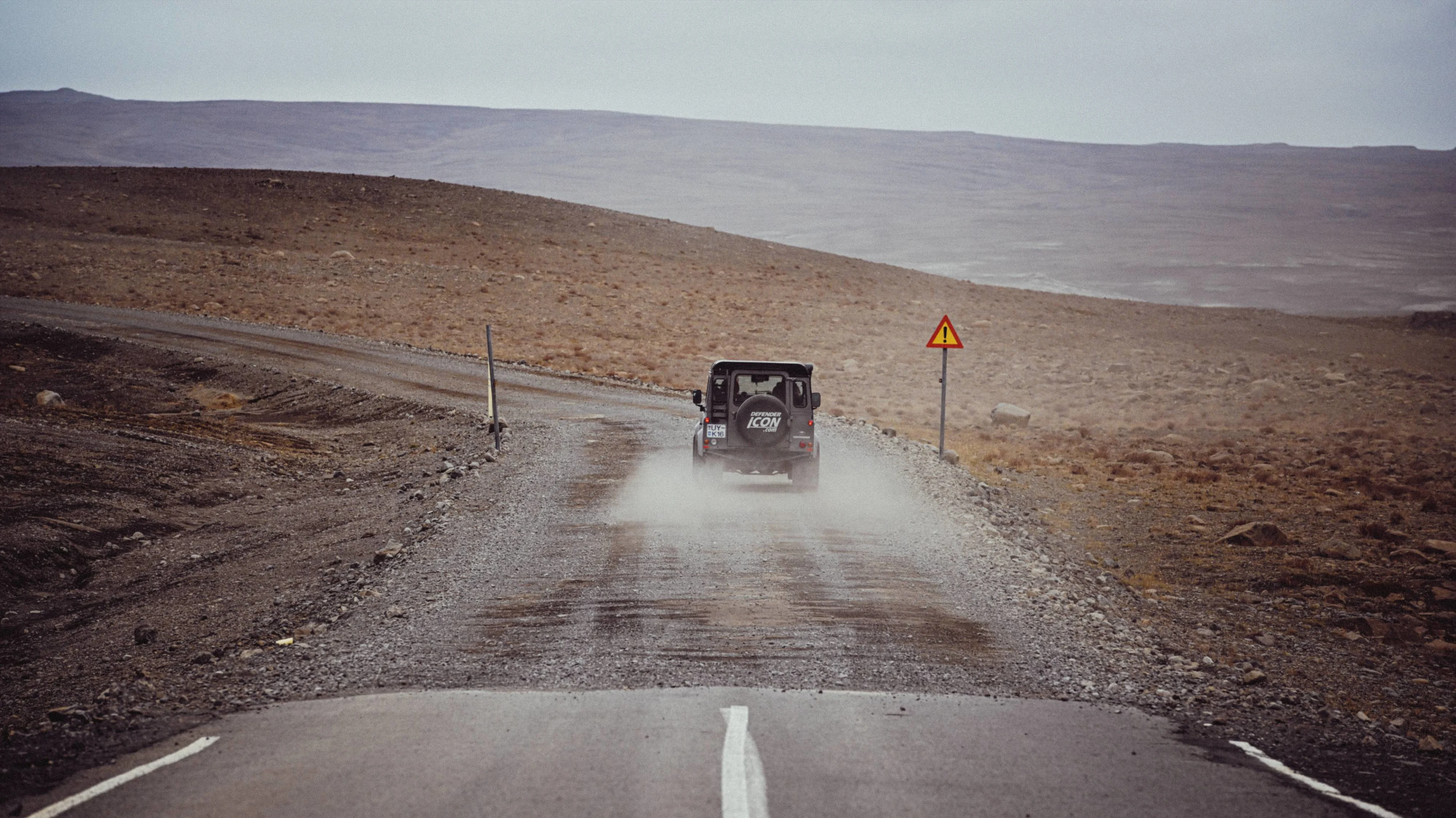
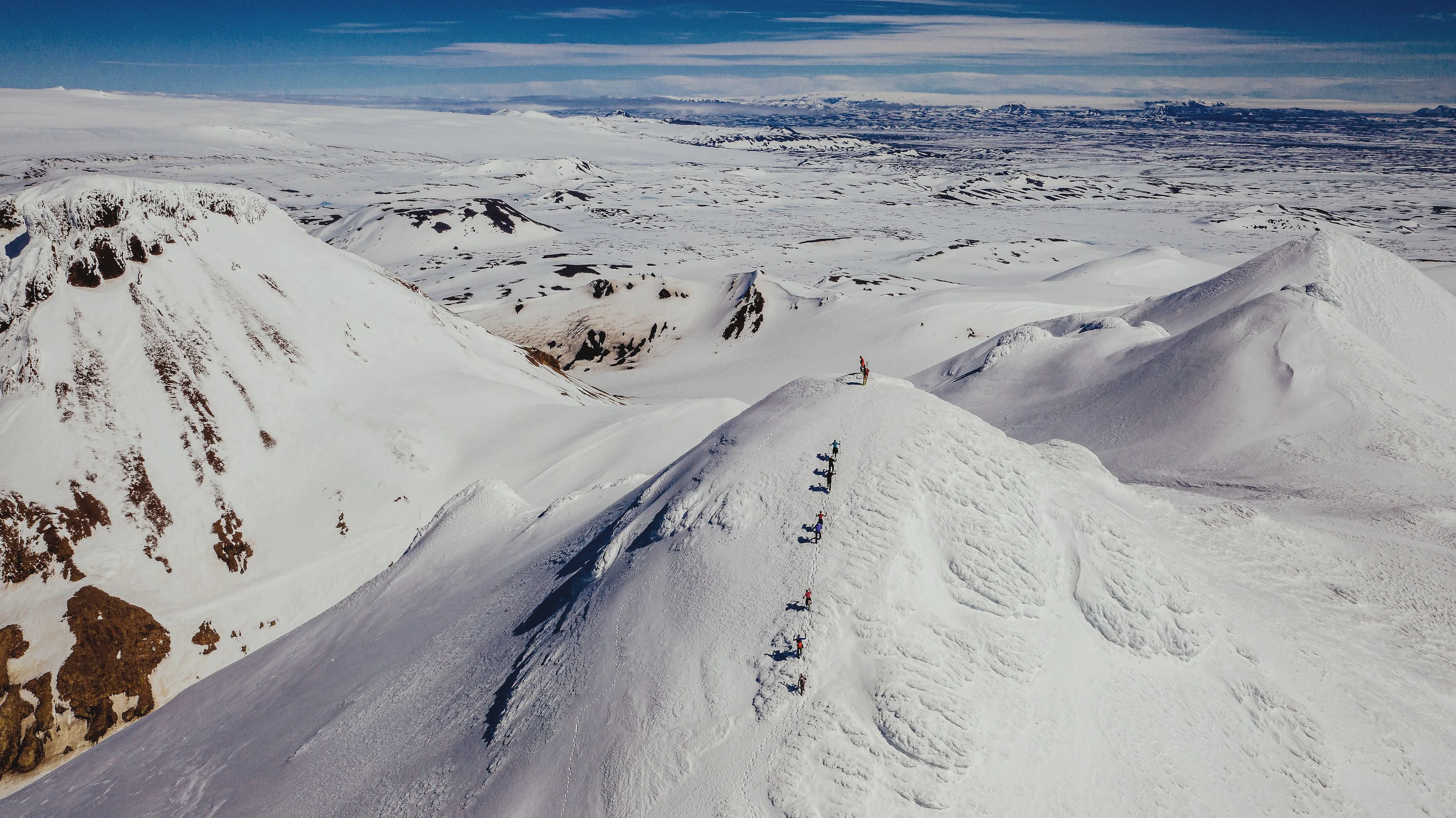
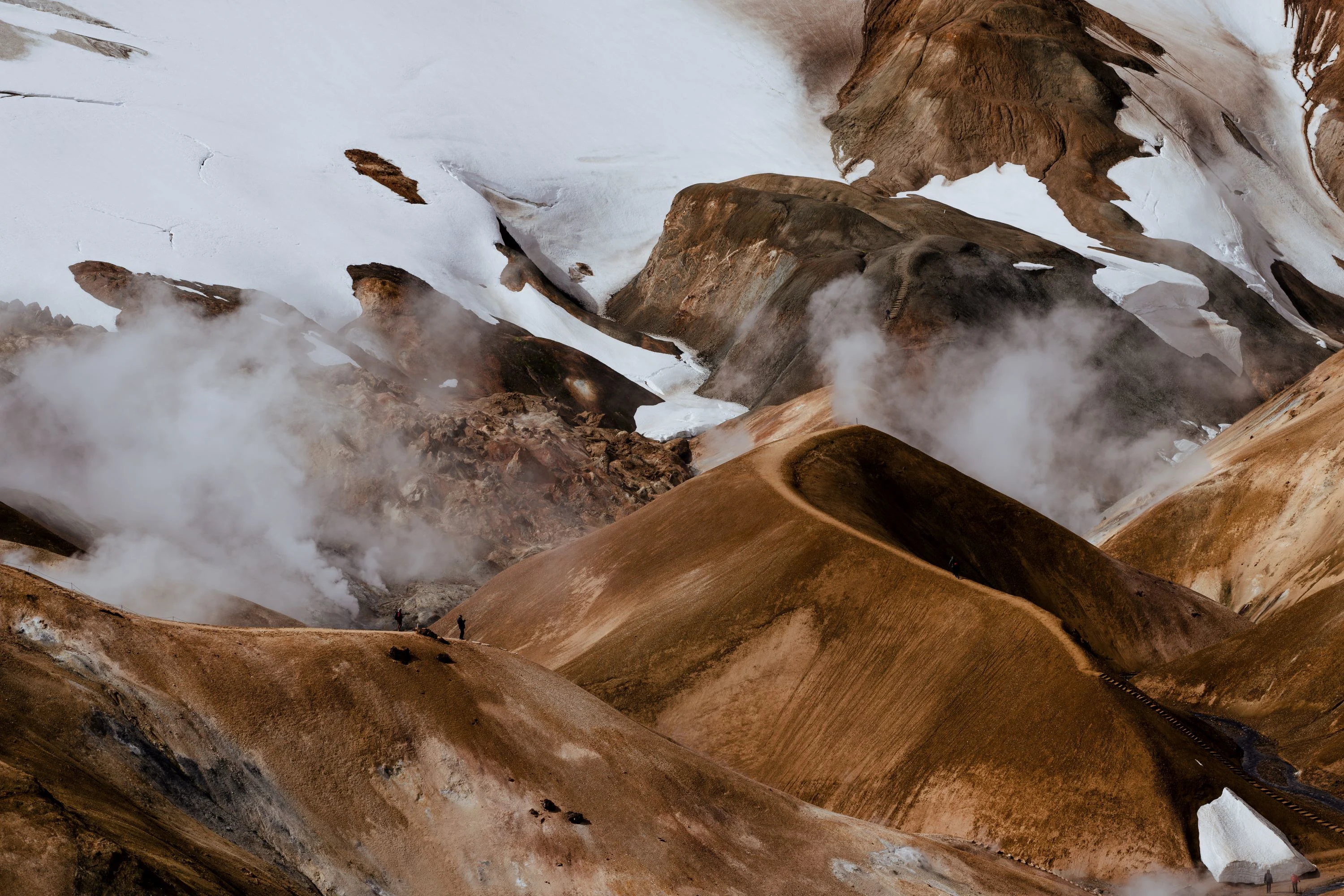
Part of the magic of the Icelandic highlands lies in the journey there. Where the asphalt ends, the adventure begins—winding through sandy wastelands and rocky glacial terrain, past ancient cliffs, and crossing glacial rivers, all in the profound silence that defines the highland wilderness.
It’s a sunny day in February, and we’re on our way to Highland Base in Kerlingarfjöll. We drive over Hellisheiði, stunning beneath a blanket of snow that sparkles in the sunlight. Between jokes, our driver Stebbi tells us about his trips to the highlands the weekend before, icy roads and heavy slush.
“Six trips per weekend, and about four weekends per month, nine months... So, I’ve made this drive over 200 times back and forth.”
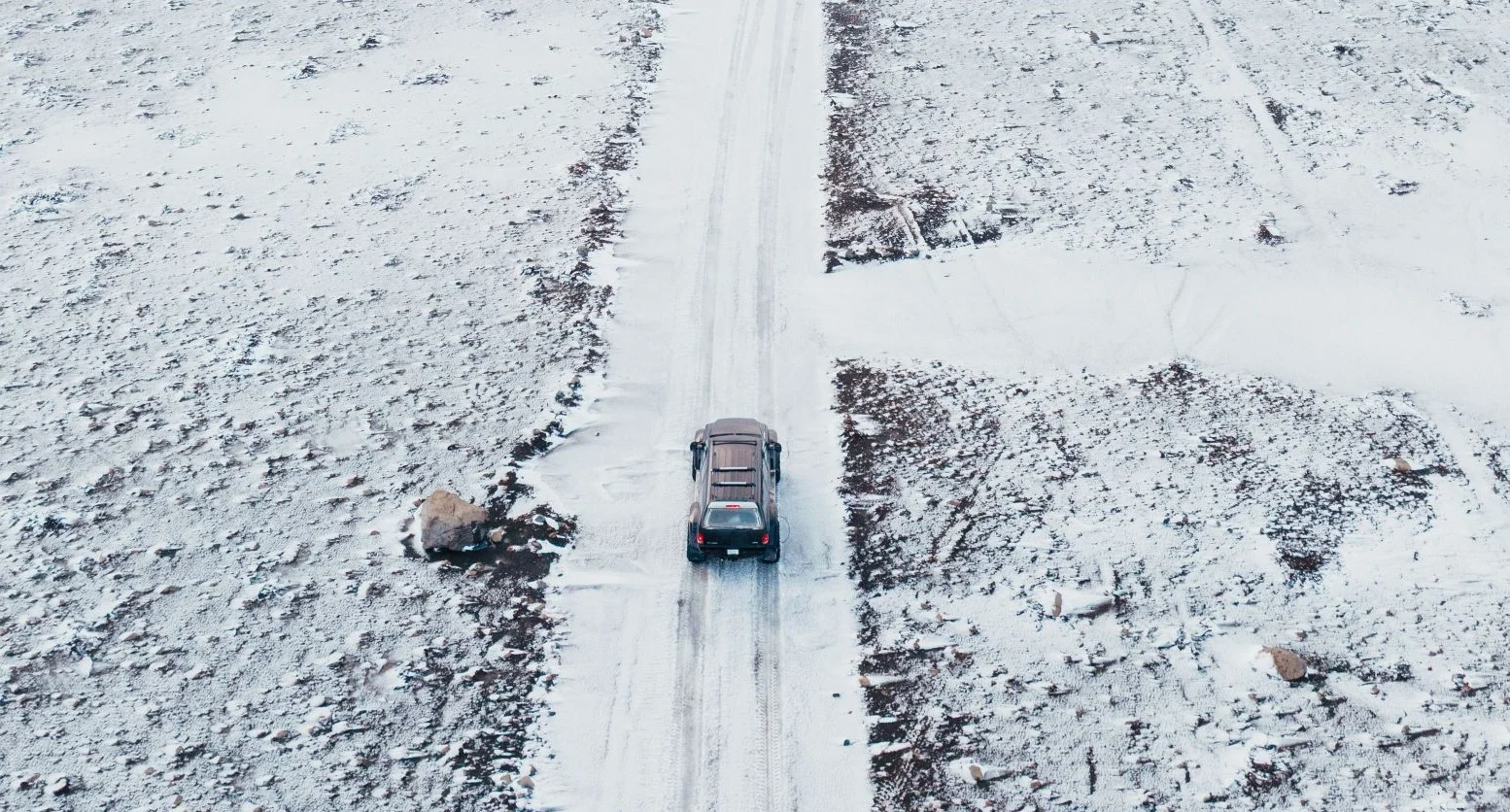
Stebbi is a driver and mountain guide and has been driving guests and staff to Kerlingarfjöll in the winter since Kerlingarfjöll Highland Base began operating. Kerlingarfjöll is in the central highlands of Iceland and the route runs along Kjalvegur, which is only accessible by specially equipped mountain jeeps in winter, driven by professionals like Stebbi. Kjalvegur sits at 600-700 meters above sea level and is largely bare mudflats, sand and lava. The weather conditions can change rapidly and it’s important that drivers are used to such conditions.
“I started spending time in the highlands regularly in '95, when I joined a volunteer rescue team. That opened the door to guiding, which I began in '97 and did part-time for about 20 years, and for the past nine years, I've been doing it full time. I feel my best in the mountains, when I’m away from the main roads and surrounded by nature.”
Stebbi tells us that shortly after he joined the rescue squad, he began driving for them and subsequently, he bought his own modified jeep.
“You learn a lot from the people you travel with, but the biggest lessons come from your own mistakes.”
Once we pass the large road closure sign at Gullfoss, conditions change. We leave the highway behind and turn onto Kjalvegur. We are traveling through a landscape of folklore and adventure, with a history that stretches all the way back to the Settlement Age. Kjalvegur was once a well-traveled route, crossing the country and connecting the north and south. This is Stebbi’s home turf. He waves to the few drivers we pass and points out signs of vehicles on earlier trips breaking through the ice or getting stuck in the slush.
“I always enjoy it when the road gets a bit rough. Once you are off the highway, that’s when the real fun begins. The tougher it is, the better, because it really makes you work with the conditions. Driving here on Kjölur in winter definitely keeps you on your toes. The weather can get pretty rough, and since we’re climbing from around 450 up to 700 meters above sea level, the conditions up here are often far more extreme than down in the lowlands.”
Not long after we cross the Sandá river, Stebbi lets us know we’re leaving the so-called raised road behind and heading onto the rougher highland tracks.
“So, before I continue, I need to stop, switch to the low range, and let some air out of the tires. This is where things start to get a bit more challenging, but also a lot more exciting.”
Stebbi explains that by letting air out of the tires, the car can float on top of the snow instead of driving through it. In winter, getting to Kerlingarfjöll means driving fully modified vehicles, there’s really no other way. The car Stebbi usually drives is equipped with 49” tires with traction locks, a tire deflation system, and high and low range.
As we drive, Stebbi deflates the tires, and we watch the pressure slowly drop on a meter in the dashboard while listening to the hiss of the deflation system. Not long after, we reach Bláfellsháls and suddenly, everything around us vanishes as we drive into a whiteout. Visibility is poor, so Stebbi follows a blue line on his GPS, occasionally veering off the route to avoid rough patches and heavy slush. He says he navigates by memory, relying on what he’s seen during past trips. He seems to know every slope and every bend by heart.
Driving Kjalvegur, one can’t help but think of those who journeyed this path in centuries past, and stories of folklore and hauntings inevitably come to mind. Looking out at the vast emptiness, it's easy to understand the fear this area once inspired. It's impossible to tell whether a shadow in the fog ahead is a boulder, another traveler, an outlaw, or maybe a ghost.
We’ve already driven through all kinds of weather, and we’re not even halfway there. Clear skies and sunshine gave way to snow, fog, and even a blizzard. But as we descend Bláfellsháls, patches of blue sky begin to break through, and the shapes of the landscape slowly become visible again.
We pass two giant super jeeps, and Stebbi rolls down the window to exchange a few words with the drivers about the weather and road conditions.
“Once you're in the highlands, everyone’s on the same team.”
Outside the windows, snow bursts out from beneath the car, and the vast wilderness stretches in every direction.
“This route we’re on is incredibly beautiful when the visibility is good. On a clear day, you can see both Langjökull, Iceland’s second largest glacier, and Hofsjökull, the third largest, along with a whole range of stunning mountains. But honestly, it’s just as fascinating when you can’t see a thing.”
All around us are signs of the glacier that once covered this area. The land is shaped by subsidence and scattered across the landscape are large boulders, carried and dropped by the glacier as it crawled across the land. Then, suddenly, we see a small house, the first we’ve seen in a long while.
“That’s Árbúðir, where the road ends, and the real challenge begins. But out here, the rule is simple, never pass up a good struggle.”
It’s clear that Stebbi enjoys the challenges that come with mountain travel.
“My first proper trip to Kerlingarfjöll was a winter trip, it took a really long time, and the weather was crazy, it was pitch black and we got stuck multiple times. It was amazing.”
He says being well-prepared makes all the difference. It’s safer, and you enjoy the trip so much more when you’re comfortable. Everyone should wear hiking boots and wool socks, plus a hat, mittens, and a good coat. The journey can take a long time, and you’ve got to be ready for all kinds of weather.
After a long journey, we are eager to reach our destination, so it is a welcome sight when we spot a sign marked “Kerlingarfjöll,” pointing us toward the turnoff that leads into the mountains. Soon after the Kerlingarfjöll turn, Gýgjarfoss greets us in its full glory; frothing glacial water surging powerfully over blue ice.
Then, at last, we see Higland Base. We descend a steep, icy slope and cross the Ásgarðsá river, which we’ve heard Stebbi guiding other drivers over earlier on the radio. It looks just as tricky as it sounded before. The road winds up a ridge and down into a valley, and suddenly Highland Base comes fully into view—we’ve arrived.
The journey has been a true adventure, but it feels good to step into the warmth, greeted by the rich, comforting aroma of waffles. Stebbi wraps up a few things by the car, then heads inside, chats with the staff, grabs a cup of coffee, and settles into a window seat in the lounge, looking out over the Ásgarðsá river and the cliffs across from Highland Base.
“This window that I'm sitting in here, I think it's amazing. I've spent quite a few evenings reading a book sitting right here. For me, it’s a great way to switch off and just enjoy the moment.”
Outside, the wind is howling and snow is falling, but we have a cozy stay in the lounge ahead, with a fire burning in the hearth and plenty to read.
The next morning, Stebbi sets out to drive the travelers back to Reykjavík. On the way, we see that the snow we drove through yesterday has melted. It feels as though we are traveling on a different road, through a different landscape. The Icelandic highlands are unpredictable. Every journey into Kerlingarfjöll unfolds in a new environment, where adventures await at every turn.